
Why Does Back and Neck Pain Take So Long to Heal?
It is completely normal to feel frustrated when back or neck pain lingers.
Understanding how the spine is built can help explain why spinal injuries often require extra time and patience to truly resolve.
The exact timeline for recovery depends on several factors, including:
- The type of tissue that is damaged
- The location of the injury
- The severity of the structural damage
- How long the problem has been present
- The amount of daily stress placed on the spine
Blood Supply: The Key to Healing Speed
The main reason many spinal injuries heal slowly comes down to circulation.
- Muscles Heal More Quickly
Muscles have an abundant blood supply.This rich network delivers oxygen, nutrients, and healing cells to damaged tissue quickly. Because of this, muscle injuries often recover faster than injuries to deeper connective tissues.
- Discs, Ligaments, and Tendons Heal Slowly
Spinal discs, ligaments, and tendons are different.These dense connective tissues have poor, limited blood supply. They cannot pull nutrients directly from the bloodstream the way muscles can.
Instead, they rely on slower, passive fluid exchange to repair themselves.
The Spine Never Gets a True Break
In addition to poor nutrient supply, the spine is constantly under mechanical stress.
Even while sitting, standing, walking, driving, sleeping, or working, the spine must handle stress from gravity, posture, and daily movement.
When discs, ligaments, or tendons are injured, this constant stress can slow the healing process.
1. Spinal Discs: The Slower Pump System
A spinal disc is a specialized cushion between the vertebrae. It acts as the spine’s shock-absorbing system.
The disc helps with:
- Shock absorption
- Spinal mobility
- Flexion, bending, and twisting
- Space maintenance between vertebrae
- Protection of exiting spinal nerves
What a Spinal Disc Is Made Of
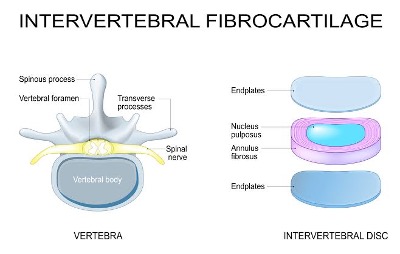
A spinal disc has three main parts:
- Nucleus pulposus: the inner jelly-like core made mostly of water and collagen
- Annulus fibrosus: the tough outer ring made of layered fibrocartilage fibers
- Vertebral endplates: cartilaginous layers that connect the disc to the bone
Spinal discs are extremely durable, but they have one major disadvantage: they are avascular, meaning they do not have their own direct blood supply.
Because of this, discs rely on nutrient diffusion and fluid exchange.
When a disc is torn, compressed, dehydrated, or degenerated, it heals exceptionally slowly or incompletely.
Why the Lumbar Curve Matters
The lower back has a natural curve that helps distribute pressure evenly across the discs.
When that curve is lost or flattened, the discs may be placed under constant uneven mechanical load.
This can interfere with the normal pumping mechanism discs use to absorb fluid and nutrients.
Healthy movement cycles compression and relaxation. This helps pump waste out and draw nutrients in.
When chronic compression blocks this process, the disc can become starved of oxygen, glucose, and water.
Over time, the disc may dry out, lose elasticity, crack, and become more prone to herniation.
2. Ligaments and Tendons: Dense and Unforgiving
Ligaments connect bone to bone. Tendons connect muscle to bone.
Both are made of tightly packed collagen fibers designed for strength and stability, not circulation.
Because they lack a rich capillary network, they look white rather than red. This low vascularity slows tissue repair.
When injured, tendons and ligaments often heal by laying down weaker, disorganized scar tissue instead of flexible collagen.
This scar tissue is less elastic and more prone to re-injury.
Every twist, bend, or step can also place stress on these tissues, creating micro-tears before healing is complete.
3. Healing Timelines by Tissue Type
Because tissues heal differently, recovery timelines vary.
General healing timelines include:
- Spinal muscles: usually 4 to 6 weeks
- Tendons and ligaments: often 6 to 12 weeks
- Spinal discs: often 3 to 12 months
Pain relief does not always mean the tissue is fully healed. This is why symptoms may return when patients stop care too soon or go back to normal activity too quickly.
4. Safe Ways to Promote Tissue Healing
The combination of chiropractic care, spinal decompression, shockwave therapy, and laser therapy can create an effective healing environment.
This multimodal approach helps address the spine’s natural biological limitations, especially the poor blood supply found in spinal discs, ligaments, and tendons.
Chiropractic Care
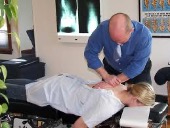 Chiropractic adjustments restore proper joint alignment, which reduces uneven mechanical wear and unloads strained ligaments and tendons.
When spinal joints move properly, surrounding tissues experience less irritation and the body can function more efficiently.
Spinal Decompression
Non-surgical spinal decompression applies precise, computer-controlled traction to the vertebrae.
 This creates negative intradiscal pressure, also known as a vacuum effect.
This vacuum effect may help pull herniated disc material back into place and actively pump water, oxygen, and nutrient-rich fluids into avascular tissues through forced imbibition.
This gives damaged tissues the raw materials needed for cellular repair.
Shockwave Therapy
High-energy shockwave therapy delivers acoustic pulses that break down chronic scar tissue, stimulate localized inflammation, and trigger angiogenesis.
Angiogenesis is the formation of brand-new microscopic blood vessels. This process helps improve circulation in the injured area.

Class IV Laser Therapy
Class IV laser therapy uses specific wavelengths of light to penetrate deep into the spine.
The light energy stimulates cytochrome c oxidase within the cell mitochondria. This process, called photobiomodulation, boosts ATP production.
ATP is the energy source cells need to synthesize new collagen, repair torn fibers, and resolve chronic pain.
Patience Is Part of Healing
Proper management of expectations begins with patient education.
Natural healing is much different than suppressing symptoms. If you are willing to be patient and work with the natural laws of healing, your patience can pay off.
Schedule a Consultation
If your back or neck pain has been lingering, returning, or getting worse, call New Hope Family Chiropractic today.
Call 401-433-3600 to schedule a consultation.