

What Is Frozen Shoulder and What Causes It?
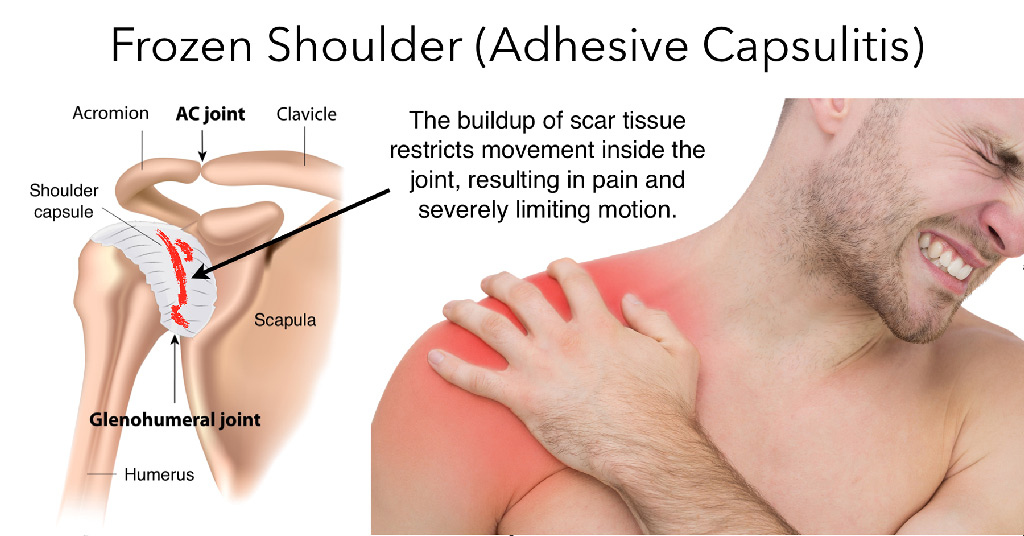
Frozen shoulder, medically known as adhesive capsulitis, is a condition that causes stiffness, severe pain, and progressive loss of range of motion in the shoulder joint.
It occurs when the strong connective tissue surrounding the shoulder joint, called the joint capsule, becomes thick, inflamed, and tightly scarred.
As the capsule contracts, it severely restricts the space available for the humerus, or upper arm bone, to move. This can make everyday activities painful and difficult.
Patients with frozen shoulder often struggle with:
- Reaching overhead
- Reaching behind the back
- Putting on a jacket
- Sleeping on the affected side
- Washing or styling hair
- Lifting the arm normally
- Performing daily activities
The Three Phases of Frozen Shoulder
Frozen shoulder typically develops in three phases.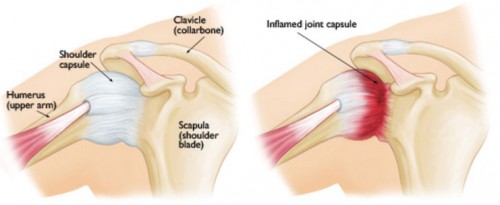
1. Freezing Phase
This is often the most painful stage.
Pain increases, and range of motion gradually becomes more limited. Patients may notice worsening shoulder pain at night or with shoulder movement.
2. Frozen Phase
During this phase, pain may decrease slightly, but stiffness becomes more severe.
The shoulder may feel locked, restricted, or unable to move normally.
3. Thawing Phase
In the thawing phase, mobility slowly begins to return.
This phase can take time, and many patients benefit from care designed to restore motion, reduce pain, and improve shoulder function.
What Causes Frozen Shoulder?
The exact cause of frozen shoulder is not fully understood, but several risk factors are associated with the condition.
Systemic Diseases
People with diabetes, thyroid disorders, or cardiovascular disease have a higher risk of developing frozen shoulder.
Immobilization
Frozen shoulder can develop after a shoulder injury, rotator cuff tear, stroke, surgery, or any situation where the arm is not moved normally for an extended period of time.
Age and Gender
Frozen shoulder most commonly affects adults between the ages of 40 and 60. It is also more common in women than men.
Standard Medical Treatments for Frozen Shoulder
Traditional medical care focuses on reducing pain in the early stages and restoring motion as the condition progresses.
Common treatment options may include:
Medication
Over-the-counter nonsteroidal anti-inflammatory drugs, such as ibuprofen or naproxen, may be used to temporarily reduce inflammatory pain.
Physical Therapy
Physical therapy is often used to gradually stretch and mobilize the shoulder capsule.
Common exercises may include pendulum exercises, wall-walking movements, and progressive stretching.
Corticosteroid Injections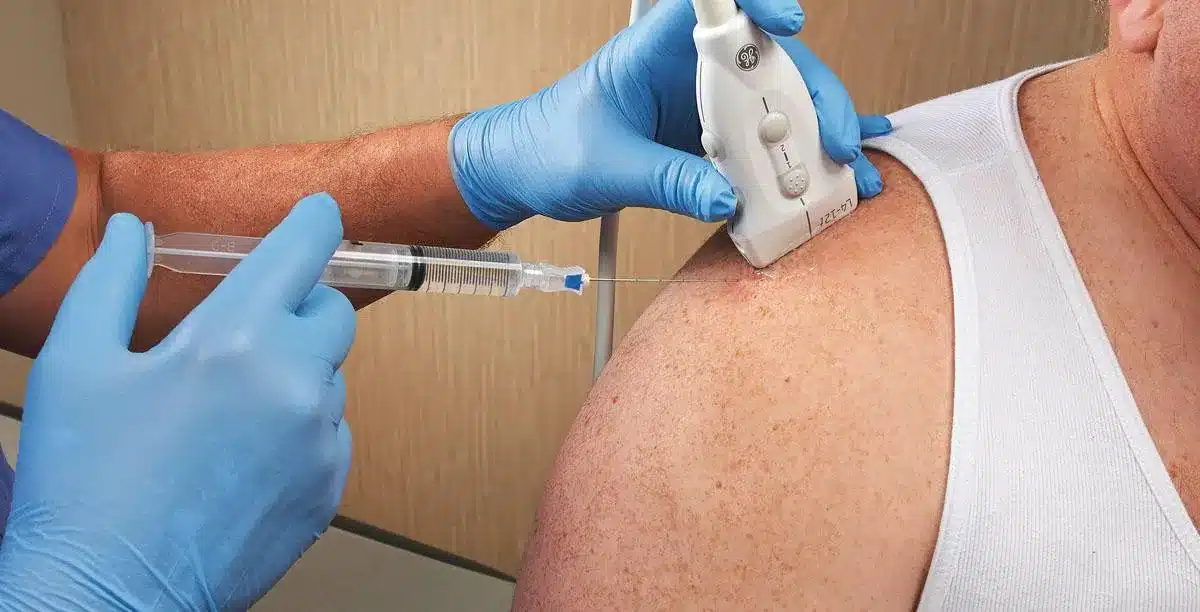
An ultrasound-guided cortisone injection into the joint capsule may help reduce severe pain and inflammation, especially during the freezing stage.
Hydrodilatation
Hydrodilatation involves injecting a high volume of sterile saline and cortisone into the shoulder joint to physically stretch and expand the tight capsule from the inside.
Surgery
In rare, stubborn cases, a surgeon may perform an arthroscopic capsular release to cut through restrictive scar tissue.
Shockwave Therapy for Frozen Shoulder
When traditional conservative treatments do not provide enough relief, advanced non-invasive therapies may be considered.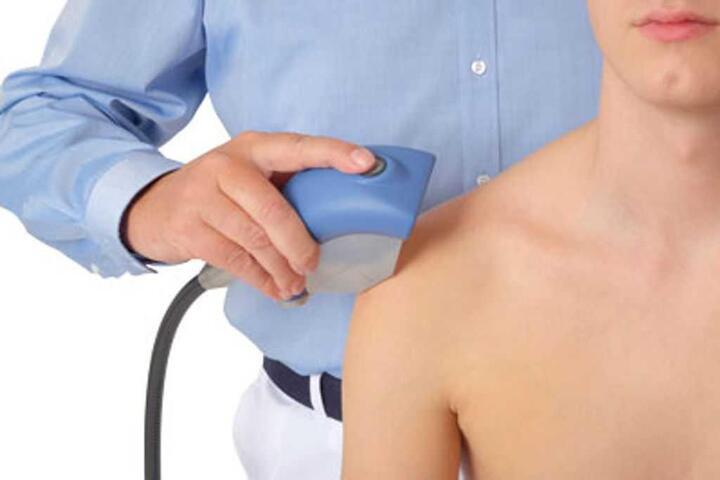
Extracorporeal Shockwave Therapy, or ESWT, delivers high-energy acoustic sound waves directly into the shoulder capsule.
The intense acoustic energy acts like a precise “blade of sound,” micro-traumatizing dense, fibrotic adhesions to help break up scar tissue.
Shockwave therapy also triggers neovascularization, which is the formation of new blood vessels. This helps flood the oxygen-deprived capsule with healing nutrients.
Research featured in the Journal of Shoulder and Elbow Surgery and BioMed Central demonstrates that shockwave therapy may provide rapid, significant short-term improvements in pain reduction and functional range of motion, specifically abduction and flexion.
Shockwave therapy may also help speed up a patient’s return to normal daily activities.
Laser Therapy for Frozen Shoulder
Laser therapy uses specific wavelengths of light to interact with damaged shoulder tissues.
Low-Level Laser Therapy and High-Intensity Laser Therapy rely on a process called photobiomodulation. Light energy penetrates deep into the soft tissue and stimulates cellular mitochondria to increase ATP production, reduce cellular inflammation, and accelerate collagen repair.
Clinical evidence indicates that laser therapy may help reduce pain scores, calm inflammation, and improve quality-of-life indicators for patients with frozen shoulder.
High-Intensity Laser Therapy, also known as HILT, delivers a higher volume of energy deeper into the dense shoulder fascia. This may produce stronger results in restoring immediate joint mobility and lowering disability scores compared with Low-Level Laser Therapy.
When to Get Help for Frozen Shoulder
Frozen shoulder can take a long time to improve on its own.
If shoulder stiffness, pain, or loss of motion is interfering with your daily life, it is important to get evaluated.
Early care may help reduce pain, protect mobility, and support better shoulder function.
Schedule a Consultation
If you or someone you know has been suffering with frozen shoulder or shoulder pain and is looking for a proven solution, call New Hope Family Chiropractic today for a free, no-obligation consultation to see if you are a candidate for these services.
Call 401-433-3600 to schedule a consultation.
