
Have You Been Suffering With Knee Pain?
Knee pain is one of the most common musculoskeletal complaints globally, affecting approximately 25% of all adults. It is a major driver of medical visits, physical limitations, and surgical procedures.
Chronic knee pain is often caused by degradation or repetitive injuries to structures in the knee joint, including:
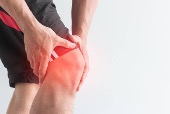
- Knee osteoarthritis (OA)
- Patellofemoral pain syndrome, also known as runner’s knee
- Meniscal tears
- Ligament sprains and strains
- General joint stiffness and degeneration
Knee osteoarthritis affects an estimated 654 million people worldwide, and about 22.9% of adults aged 40 and older live with knee osteoarthritis.
Patellofemoral pain syndrome carries a 25% lifetime prevalence.
Meniscal tears affect roughly 12% of the adult population.
For many patients, knee pain begins as stiffness, soreness, or discomfort with certain activities. Over time, it can affect walking, stairs, exercise, work, sleep, and quality of life.
Why It Is Important to Do Something About Knee Pain Now
When knee pain becomes chronic, its impact can expand beyond physical discomfort.
Patients may begin moving less, gaining weight, avoiding activities, and compensating with the hips, back, or opposite knee. This can contribute to more stiffness, weakness, and reduced mobility.
- One-third of adults over 45 with severe joint pain suffer from depression or anxiety due to chronic fatigue and physical limitations.
- 44% of adults with arthritis-related joint pain report clear limitations in their ability to perform daily activities.
- Over 50% of individuals diagnosed with symptomatic knee osteoarthritis will eventually undergo a total knee replacement during their lifetime.
If you are living with chronic knee pain, stiffness, or have been told you are “bone-on-bone” but are trying to avoid knee replacement surgery, Knee Decompression may be an option worth exploring.
A Non-Surgical, Drug-Free Solution for Knee Pain
New Hope Family Chiropractic & Disc Centers of Providence now offers Knee Decompression using the Accu Knee Decompression Chair.
Knee decompression is a non-surgical, drug-free, injection-free therapy that gently separates the bones of the knee joint to create space, reduce internal pressure, and relieve friction. This approach alleviates chronic pain, swelling, and stiffness caused by osteoarthritis, meniscus injuries, or general joint degeneration.
Unlike a knee brace, which supports the knee externally, Knee Decompression is an in-office therapy designed to address pressure and mobility inside the joint itself.
What Is the Accu Knee Decompression Chair?
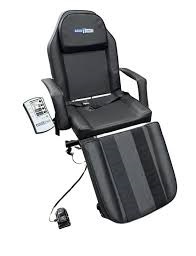
The Accu Knee Decompression Chair is a specialized, computer-controlled, non-invasive system designed to help alleviate chronic knee pain caused by osteoarthritis, meniscus tears, and degeneration.
The Accu Knee device uses patented oscillating technology to gently separate the joint space between the femur and tibia.
This creates a negative pressure or “vacuum effect” within the knee joint, which promotes healing by increasing circulation, allowing nutrient-rich synovial fluid to seep into the cartilage, and reducing friction between worn-out cartilage surfaces.
The treatment may also be combined with other therapies, such as shockwave therapy, electroanalgesia, or laser therapy, to further reduce inflammation and pain and promote healing.
Is Accu Knee FDA Cleared?
Yes. The Accu-KNEE System is a registered, FDA-cleared Class II medical device.
It is developed and manufactured by North American Medical, a recognized leader in non-surgical spinal decompression technologies.
This clearance ensures that the device meets strict safety and efficacy standards for its intended use in treating degenerative knee conditions.
Important note for review: the newsletter copy also says “first FDA-approved Knee Decompression Chair.” Dr. Lincoln should confirm whether he wants the public-facing copy to say FDA-cleared or FDA-approved.
What Conditions Does Knee Decompression Help With?
Knee Decompression may help patients dealing with:
Osteoarthritis
Knee Decompression reduces stress on worn cartilage, alleviates pain, and slows joint degeneration.
Meniscus Tears
Knee Decompression creates space to reduce friction and promote circulation for cartilage healing.
Patellofemoral Pain Syndrome
Knee Decompression helps realign the kneecap and decreases grinding in the front of the knee.
Ligament Sprains and Strains
Knee Decompression relieves joint compression to support stability and tissue repair.
General Joint Stiffness and Chronic Pain
Knee Decompression aids in the rehabilitation of post-surgical stiffness and overuse injuries.
How Does Knee Decompression Work?
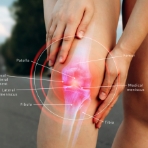 Knee Decompression works by gently separating the knee joint using controlled traction.
This process is designed to:
Relieve Joint Pressure
By creating a slight vacuum in the joint, Knee Decompression takes stress off worn-out cartilage and surrounding soft tissues.
Boost Blood Flow
The separation promotes circulation, bringing vital oxygen and healing nutrients into damaged tissues.
Improve Lubrication
Knee Decompression draws synovial fluid, the joint’s natural lubricant, back into the area, allowing the knee to glide more smoothly.
Restore Mobility
Gently stretching the tendons and ligaments helps restore lost flexibility and range of motion.
Knee Decompression relieves pressure on cartilage, reduces inflammation, improves circulation, and accelerates tissue healing.
Clinical Studies and Reported Results
Clinical studies on knee decompression report a general success rate between 75% and 89% for pain reduction and improved mobility.
A breakdown of what the clinical trials and data show includes:
Significant Pain Reduction: A 2019 study published in the Journal of Clinical Medicine tracked patients with knee osteoarthritis over 12 weeks and found that 78% reported meaningful improvements in daily pain levels.
Superior to Exercise Alone: Multiple randomized controlled trials, compiled in a 2024 literature review, compared patients who performed standard physical therapy exercises with those who received mechanical traction in addition to exercises. The traction groups consistently showed greater decreases in pain severity and higher functional mobility.
Rapid Initial Relief: In smaller retrospective case series, such as a study evaluating Cox decompression protocols, patients experienced a dramatic drop in Visual Analog Scale pain scores from an average of 7.7 down to 1.8 in 5 to 6 treatments.
Cartilage Health and Fluid Absorption: Biomechanical research confirms that gentle joint unloading creates a vacuum effect. This pressure change forces nutrients and oxygen-rich synovial fluid back into the damaged articular cartilage, which helps slow down joint degeneration.
How We Increase the Effectiveness of Knee Decompression
Class 4 Laser Therapy and Shockwave Therapy are advanced, non-surgical treatments that may be used with Knee Decompression to target knee pain at the cellular and structural levels.
>While both therapies accelerate recovery and significantly decrease pain scores, they achieve this through different but complementary physiological mechanisms.
Class 4 Laser Therapy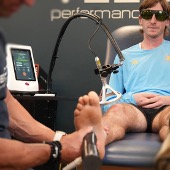
Class 4 Laser Therapy, also known as High-Intensity Laser Therapy, delivers high-power, deeply penetrating infrared light energy directly into the knee joint and surrounding soft tissues.
Class 4 Laser Therapy primarily resolves knee pain through photobiomodulation, a process in which light energy triggers chemical changes in cells.
Benefits may include:
Massive Boost in Cellular Energy: The laser stimulates chromophores in the cell mitochondria, dramatically increasing production of Adenosine Triphosphate, or ATP. This surge in cellular fuel accelerates natural tissue repair, collagen synthesis, and cell replication.
Rapid Pain and Swelling Relief: The light energy immediately dampens nerve excitability to block pain signals while inducing immediate vasodilation. This clears out excess fluid, brings oxygen-rich blood to the knee, and prompts the brain to release pain-killing endorphins.
Patients typically feel a deeply soothing, relaxing warmth over the knee joint during a fast treatment session.
Shockwave Therapy
Shockwave Therapy, also known as Extracorporeal Shockwave Therapy, uses a specialized device to emit high-energy mechanical acoustic waves into painful areas of the knee.
Shockwave Therapy treats chronic knee pain by intentionally inducing controlled micro-trauma to kickstart a stagnant healing cycle.
Benefits may include:
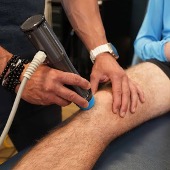 Breaking Down Scar Tissue: The acoustic waves exert intense mechanical stress that physically breaks up stiff scar tissue, dense fibrosis, and painful calcific deposits embedded within knee tendons and ligaments.
Neovascularization: The micro-trauma triggers the release of vital growth factors that force the knee to grow brand-new microscopic blood vessels. This introduces a permanent boost in circulation to poorly vascularized tissues like the meniscus or patellar tendon.
Chondrocyte and Subchondral Bone Repair: Clinical studies show that shockwaves stimulate cartilage-producing cells and support the bone layer directly beneath knee cartilage, making it highly effective for mild-to-moderate osteoarthritis.
Treatment involves a rapid tapping acoustic pressure wave. It can feel sharp or moderately intense over tender spots, but sessions are brief.
How Is Accu Knee Different from Other Knee Devices?
It Decompresses — It Does Not Just Brace
Most knee braces apply pressure to move the knee into a better position. They are passive supports worn during activity.
The Accu-KNEE system is an active therapy, not a brace. It uses an oscillating traction pattern that alternates between decompression and partial relaxation to pump nutrients into the joint.
Advanced Computer Control
Some older knee decompression devices require manual adjustments.
Accu Knee is a computer-controlled system that allows precise, customized traction forces tailored to the patient’s specific condition and response.
It Focuses on Regeneration
Accu Knee aids in cartilage protection and regeneration by reducing lateral movement and relieving pressure on the Proteoglycan Matrix, the part of cartilage that provides cushioning.
The Decompression Angle Matters
The angle is critical when decompressing the knee joint because it determines how effectively the joint space is separated.
Precisely setting the angle allows the mechanical traction to pull at the optimal vector to separate the femur and tibia. This separation creates a vacuum effect that pulls nutrient-rich synovial fluid back into the joint.
Accurate angle setting helps rehydrate joint tissues and deliver oxygen and nutrients necessary for repair.
Safe Post-Surgical Option
The Accu Knee system is safe to use for rehabilitation after a knee replacement, usually at least one year post-surgery, to reduce stiffness and improve mobility.
Key Benefits of Accu Knee Therapy
- Non-invasive
- No incisions, injections, or implants required
- Drug-free pain relief
- Helps reduce reliance on medication
- Targets joint degradation and lack of circulation
- Short session times, usually 20 to 30 minutes
- Helps avoid or delay surgery
- Ideal for patients trying to avoid or delay knee replacement surgery
Are You a Candidate for Accu Knee Decompression?
Accu Knee is generally recommended for people dealing with:
- Chronic knee pain
- Stiff joints
- Osteoarthritis of the knee
- Meniscal tears or degeneration
- Failed knee surgeries
- Chronic sports-related knee injuries
If you are tired of pain limiting your daily activities, such as climbing stairs or walking, the Accu Knee system may offer a scientifically grounded, non-surgical pathway to recovery.
Call today for a free consultation to see if you are a candidate for this new technology.
Call 1-401-325-7125 or 1-401-433-3600 to schedule your consultation.